TL;DR: The best lead paint testing company in Kingsburg, CA is one whose inspector holds a current CDPH Lead Inspector/Assessor certification (verifiable in the state’s own directory), explains whether they’ll use a portable XRF analyzer or lab paint-chip samples before they arrive, and has no financial stake in whether lead turns up, because they do not also perform abatement. Confirm those three things and you have the real comparison that matters, not a star-rating guess.
If you’re closing on a pre-1978 home near Kingsburg’s historic Swedish Village downtown, or pulling permits to remodel one, you’ve probably noticed that federal and state disclosure rules both hinge on one question: is there lead-based paint in this house? Picking who answers that question matters, because the report follows the property through escrow, through your contractor’s scope of work, and sometimes into a dispute. Here’s what actually separates a solid lead paint testing company from one that’s just cheap or just first on a search result.
What should I look for when choosing a lead paint testing company in Kingsburg?
Look for three things before you book: a verifiable state lead certification, a clear answer on testing method (XRF or lab sample), and independence from the remediation side of the work. Everything else, like how fast someone answers the phone, is secondary to these.
California regulates who is legally allowed to perform lead paint inspections for pre-1978 housing. A company that can’t tell you, in one sentence, who on their team holds that certification and what it covers shouldn’t be your first call. Ask for the certification type by name, not just “we’re certified.”
Is the inspector CDPH-certified as a Lead Inspector/Assessor?
Yes, that’s the specific California credential to ask for, and you can check it yourself before you ever sign anything. California’s lead-related construction program, run through the California Department of Public Health, maintains a public directory of certified lead professionals, including the Lead Inspector/Assessor category that covers pre-sale and pre-renovation testing.
Arch Environmental Group LLC’s team holds certification as a Certified Asbestos Consultant and Lead Inspector/Assessor, along with a NIOSH 582 equivalent microscopist credential used for asbestos fiber analysis. That combination matters in a lot of Kingsburg’s older farmhouses and downtown bungalows, where a renovation scope often raises both lead and asbestos questions on the same visit (see our asbestos testing guide for the area).
Don’t take a company’s word for the certification. Ask for the certificate number and look it up. It takes two minutes and it’s the single most useful comparison step on this list.
XRF vs lab paint-chip samples: which method should the company use?
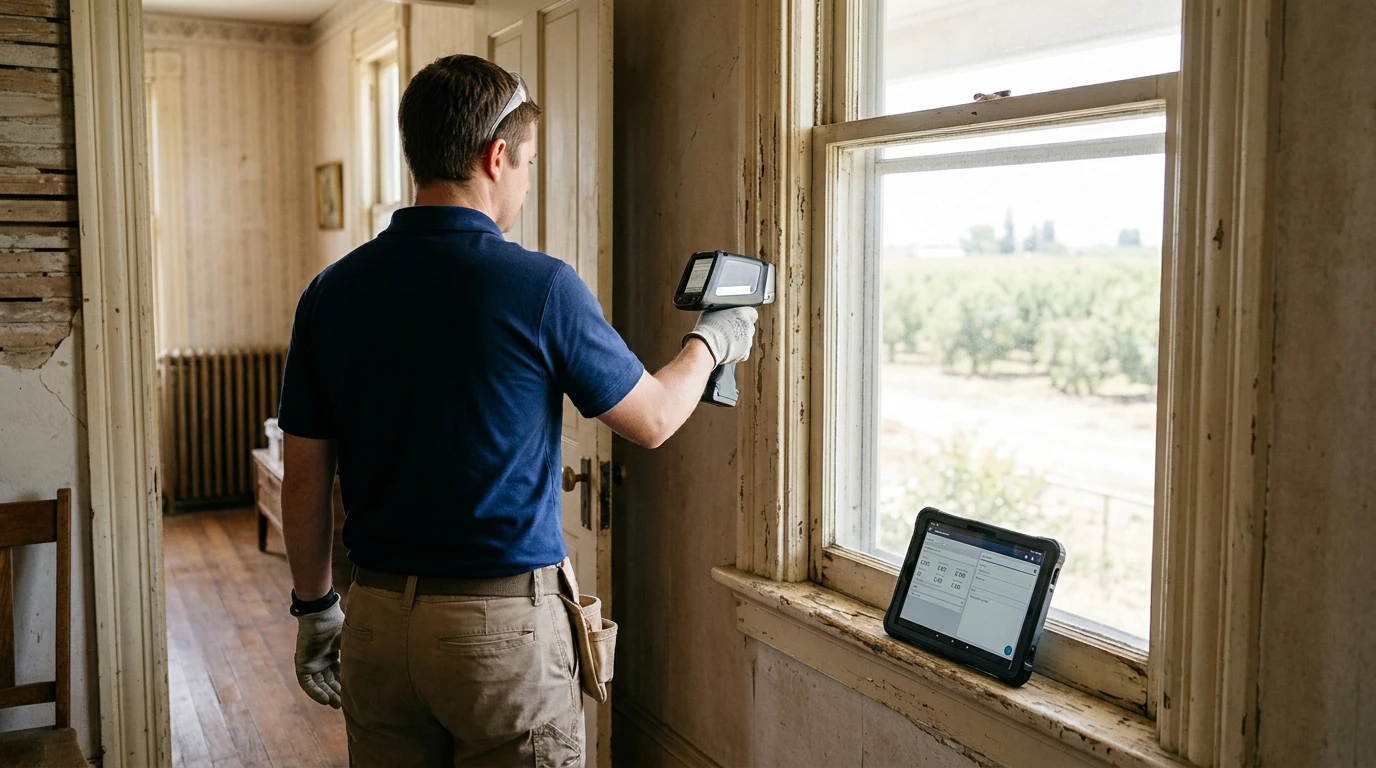
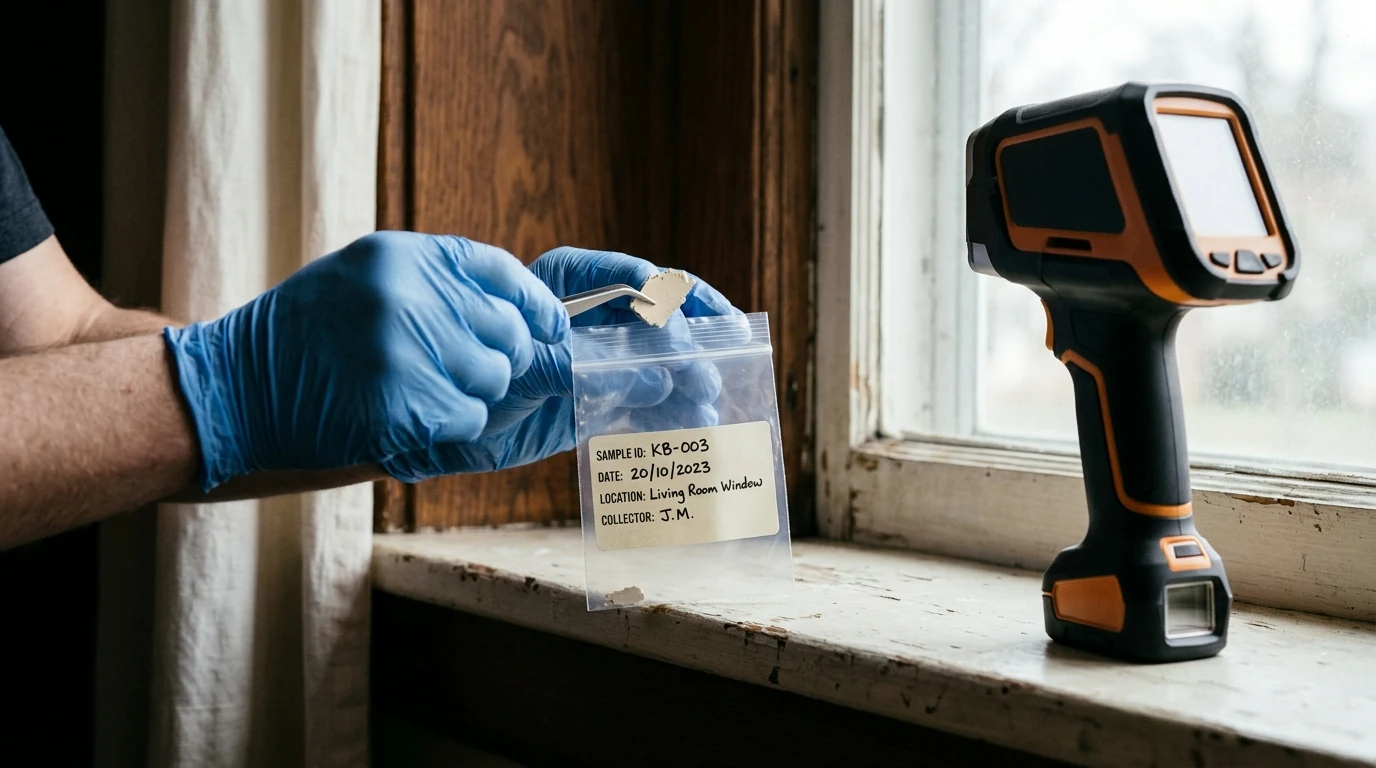
A portable XRF analyzer reads lead content through paint layers in seconds and is the most common method for whole-house inspections; lab analysis of a small paint chip sample is slower but useful for confirming borderline readings or multi-layer paint systems. Most Kingsburg inspections combine both as needed rather than relying on just one.
An X-ray fluorescence (XRF) analyzer is pressed directly against a painted surface, like a window casing or a baseboard, and gives a reading on the spot. It’s non-destructive and fast, which is why it’s the standard tool for room-by-room testing. The tradeoff: readings near the regulatory threshold sometimes need a confirming paint chip, which is cut, bagged, and sent to an accredited lab.
A company worth hiring should explain which method they’re using and why, not just show up with one tool and call it comprehensive. If your property has a lot of painted trim original to its construction era, ask whether the inspector plans a representative sampling strategy across rooms, or just a handful of spot checks.
Does the company also perform lead abatement, and why does that matter?
It matters because a company that profits from finding lead has a built-in incentive to find it, and a company that only tests has no such incentive. This is the independence question, and it’s worth asking directly: “If you find lead, who does the removal work?”
Arch Environmental Group LLC tests. It does not perform abatement, demolition, or paint removal. That separation means the report you get back reflects what the XRF readings and any lab results actually show, not what makes the next invoice bigger. If results call for abatement, that report hands off cleanly to any qualified, licensed abatement contractor you choose, it isn’t written to steer you toward a specific crew.
The same logic applies after abatement work is done: clearance testing that confirms the job is actually finished should come from someone who didn’t do the removal. That’s not a knock on remediation contractors, it’s just how an unbiased result works. For more on why this separation exists across environmental testing generally, see why your mold tester shouldn’t be your mold remover, which covers the same principle.
What should the written report include, and how fast should I get it?
A usable lead paint testing report lists every component tested (room by room), the result for each (positive, negative, or inconclusive), the method used, and a summary a lender, buyer, or contractor can act on without calling to ask questions. Typical lab turnaround across the industry runs 24 to 72 hours when a paint chip sample is involved; XRF-only results are often available the same day since there’s no outside lab step.
Ask to see a sample report, with addresses redacted, before you book. If the company can’t produce one, that’s worth noticing. A report that just says “lead detected” or “lead not detected” with no component breakdown isn’t going to hold up for a real estate transaction or satisfy a renovation permit requirement.
Lead paint itself isn’t new information. The federal government banned residential lead-based paint sales in 1978, which is why anything built before that date gets flagged for testing in the first place. The EPA’s lead program covers the broader regulatory background if you want it, but for a specific property, the only thing that actually answers the question is a certified inspection done on-site.
If your Kingsburg property fits that pre-1978 window and you’re working against an escrow deadline or a permit, schedule a lead paint test with an independent inspector, review the certification before the appointment, and keep the report with your closing documents.
About Arch Environmental Group LLC
Arch Environmental Group LLC is a licensed and insured, locally owned environmental testing company based in Kingsburg, CA, founded in 2026. Its inspectors hold certification as a Certified Asbestos Consultant, Lead Inspector/Assessor, and NIOSH 582 equivalent microscopist. The company handles lead paint testing, asbestos testing, mold inspection, indoor air quality testing, and related environmental assessments across the Central Valley, with all lab-confirmed samples analyzed by accredited third-party laboratories. Arch Environmental Group LLC does not perform remediation or abatement work, so every report reflects an independent result with no incentive to find a problem that isn’t there.
Need help now? Call Arch Environmental Group LLC at (559) 296-2088.