
Water is spreading across the floor right now, or it just stopped because you found the shutoff valve in time. Either way, the next few minutes decide how much damage a burst pipe in Kingsburg turns into, and the next 24 hours decide whether mold becomes the second problem on top of the first. Here is exactly what to do, in order, and who actually answers each call.
What do you do in the first 60 seconds?
Shut off the water at the main valve, then cut power to any outlets or fixtures standing in water. Those two moves stop the pipe from doing more damage and remove the shock hazard before you touch anything else.
- Find the main shutoff (usually at the street-facing wall or near the water meter on most Kingsburg homes) and turn it clockwise until it stops.
- If water is pooling near outlets, switches, or a water heater, shut off the breaker for that area at the panel. Do not stand in water to reach a breaker.
- Move electronics, rugs, and boxes off the floor before they soak through.
- Take photos and a short video of the water and the source before you clean anything up. You will want this for the insurance claim later.
- Open a window if the weather allows it, to start moving air through the room.
Who do you call first, a plumber or a restoration contractor?
Call a licensed plumber first to stop the source, then call a water mitigation and drying contractor the same day. Burst pipe water starts out relatively clean, but every hour it sits and soaks into drywall, flooring, or framing, it degrades and the clock on mold risk keeps running.
The plumber’s job is narrow and urgent: find the break, cut out and replace the damaged section, and confirm nothing else in the line is compromised. Water straight from a supply line is generally what the ANSI/IICRC S500 standard classifies as Category 1, relatively clean, but that classification doesn’t hold once the water sits for hours or soaks into building materials.
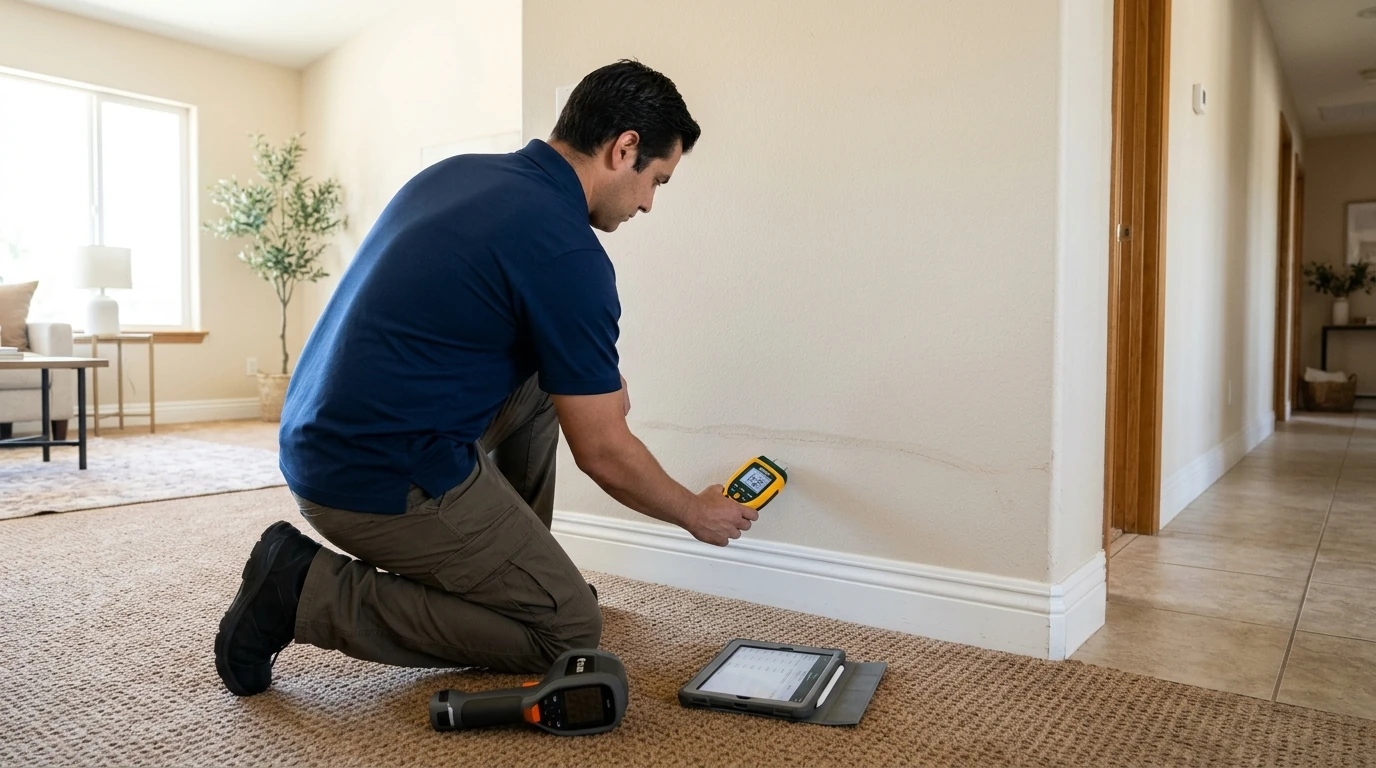
The drying contractor’s job comes right after: pulling out standing water, setting air movers and dehumidifiers, and mapping which walls, baseboards, and subfloor sections are still wet with a moisture meter. This is specialized, time-sensitive work, and it’s separate from what an environmental testing company does.
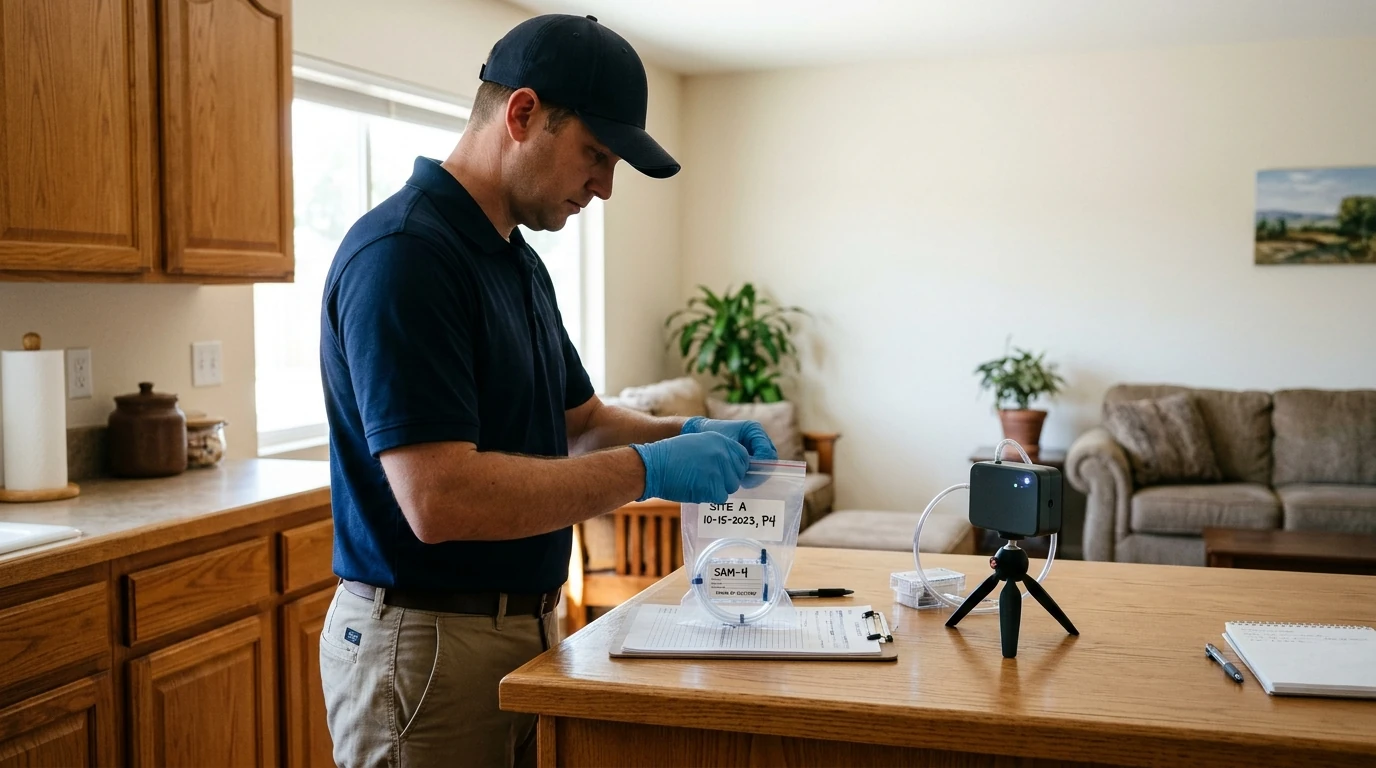
That’s where Arch Environmental Group LLC fits in, but only for one specific part: once the plumber has stopped the leak and a drying contractor has extracted the water and set up equipment, an independent test confirms the structure actually dried and nothing was missed behind a wall or under flooring before you close everything back up. Arch doesn’t perform plumbing repairs or water extraction, so there’s no incentive to find a problem that isn’t there, which is exactly the point of why your tester should never be your remediator. Their post-flood mold assessment and clearance testing are scheduled by appointment once the active repair work is underway or finished, not as an dispatch.
What happens in the first 24 hours after a burst pipe?
The first 24 hours are about stopping the water, removing what’s already wet, and starting air movement, because materials that stay wet past that window are at real risk for mold growth. According to EPA guidance, mold can begin growing on wet materials within 24 to 48 hours, which is the main reason the order of calls matters.
A typical timeline looks like this: in the first hour you shut off the water, document the damage, and call the plumber. Over the next few hours, the plumber repairs the break while you call a mitigation contractor to start extraction. By the end of day one, air movers and dehumidifiers should be running on any wet drywall, baseboards, or subfloor. Drying is usually monitored daily with a moisture meter until readings return to a dry baseline, which can take several days depending on how much water got in and what it reached.
Central Valley homes around Kingsburg often sit on slab foundations, which means a burst pipe under a kitchen or bathroom can push water sideways under cabinetry and flooring where it’s easy to miss. Older homes with crawl spaces have the opposite problem, water drops down and pools under the house, out of sight. Either layout is a reason to have moisture checked in spaces that look dry on the surface before you assume the job is done, which is the gap our post about mold testing after water damage walks through in more detail.
Does homeowners insurance cover a burst pipe in Kingsburg?
Most homeowners policies cover sudden, accidental water damage from a pipe that bursts without warning, but coverage depends on the cause and how quickly you acted to limit further damage. According to the Insurance Information Institute, gradual leaks, long-term seepage, and damage from poor maintenance are typically excluded even under the same policy that would cover a sudden burst.
Homeowners have a duty to mitigate damage once it happens, which means documenting everything with photos, keeping receipts for the plumber and drying work, and not delaying repairs while waiting on an adjuster. Coverage details vary by state, insurer, and the specific policy language, so confirm what your policy actually says rather than assuming. Nothing here guarantees how any individual claim will be decided.
Once the plumber and drying contractor have done their parts, an independent moisture check or mold assessment gives you a written, third-party record for the insurance file and peace of mind before you patch drywall back over the area. Call Arch Environmental Group LLC at (559) 296-2088 to schedule a post-flood mold assessment or clearance test in Kingsburg, or visit the Kingsburg service area page for more on coverage in the surrounding Central Valley.
About Arch Environmental Group LLC
Arch Environmental Group LLC is an independent environmental testing company based in Kingsburg, CA, founded in 2026. Their work includes mold inspection and testing, post-flood mold assessment, and clearance testing across the Central Valley, with sampling handled by certified staff including a Certified Asbestos Consultant, Lead Inspector Assessor, and NIOSH 582 Microscopist. This post was prepared with the Arch Environmental Group team.