TL;DR: Lead paint testing in Kingsburg typically costs between $150 and $1,100, depending on whether you need a quick XRF screening, a full lead risk assessment, or dust wipe clearance after a renovation. Homes built before 1978, the year the federal government banned lead-based residential paint, are the ones that usually need testing before a sale, a rental turnover, or remodeling work. A handheld XRF reading costs less per surface than sending paint chips to a lab, but lab analysis is sometimes the better call for a small job or a disputed result.
If you’re renovating a 1950s farmhouse near Draper Street and your contractor just said the EPA’s Renovation, Repair and Painting Rule means the painted surfaces need to be tested before anyone starts sanding, or you’re under contract on an older home and the disclosure mentions “original painted trim,” you want a straight answer on cost before you schedule anything. Here’s what actually moves the price, and when a cheaper option is enough.
How Much Does Lead Paint Testing Cost in Kingsburg, CA?
Most Kingsburg properties fall somewhere between $150 for a narrow, single-area XRF screening and $1,100 for a combined lead and asbestos pre-remodel package on an older home. The exact number depends on the home’s size, how many painted components get tested, and whether lab analysis is involved.
| Scope | Typical Cost Range |
|---|---|
| Single-room XRF screening (windows, doors, trim) | $150 - $300 |
| Whole-home XRF lead inspection (single-family, 1-2 story) | $350 - $650 |
| Paint chip sampling + accredited lab analysis (per set of samples) | $200 - $400 |
| Full lead risk assessment (inspection, dust wipes, soil as needed) | $450 - $900 |
| Post-renovation dust wipe clearance (3-5 wipe samples) | $200 - $450 |
| Lead + asbestos combined pre-remodel testing | $500 - $1,100 |
These are typical industry ranges for this type of work, not a quote. Every property is different, and Arch Environmental Group LLC provides a written scope before any testing begins, so you know what’s included before you commit.
What Drives the Price of a Lead Inspection or Risk Assessment?
The biggest factors are home size, the number of distinct painted surfaces being tested, and whether a full risk assessment report is required versus a simple presence/absence inspection. A two-story farmhouse with original exterior trim, interior baseboards, and window sashes takes longer to test than a single remodeled kitchen.
Accessibility matters too. Exterior siding and trim on a two-story home, or painted surfaces in a crawl space, take more time than ground-floor interior walls. If a lender, a county permit office, or a real estate transaction requires a formal written risk assessment rather than a basic screening, that adds report-preparation time on top of the fieldwork.
When paint chips need lab confirmation instead of an on-site XRF reading, the number of individual samples sent for analysis also drives cost: a single suspect area is cheaper to confirm than a whole-house sampling plan.
XRF Inspection vs Paint Chip Lab Analysis: Which Costs More?
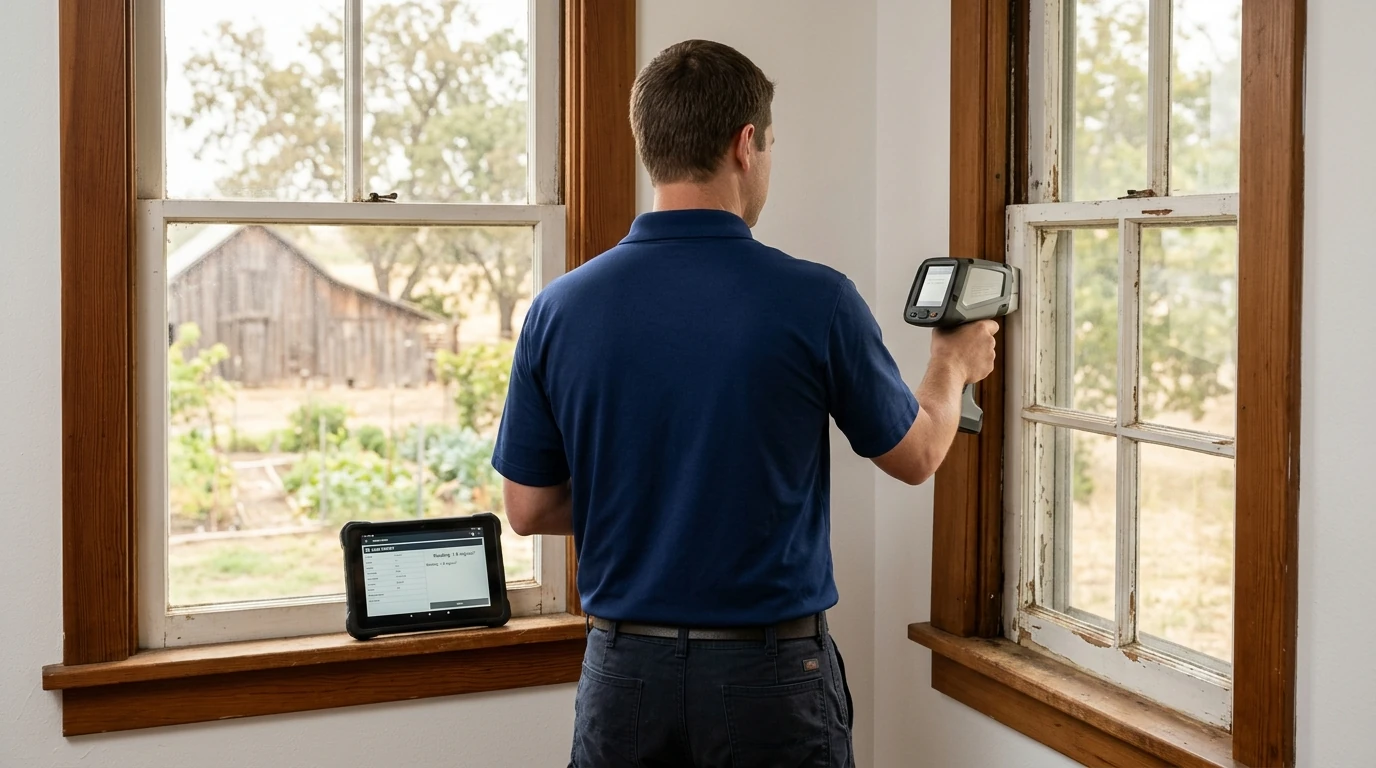
An XRF reading is usually the lower-cost option per surface because results are read on site in seconds with no lab turnaround. A certified inspector presses a handheld XRF analyzer against a painted window frame, door casing, or baseboard, and the device reports the lead content directly, with nothing removed or damaged.
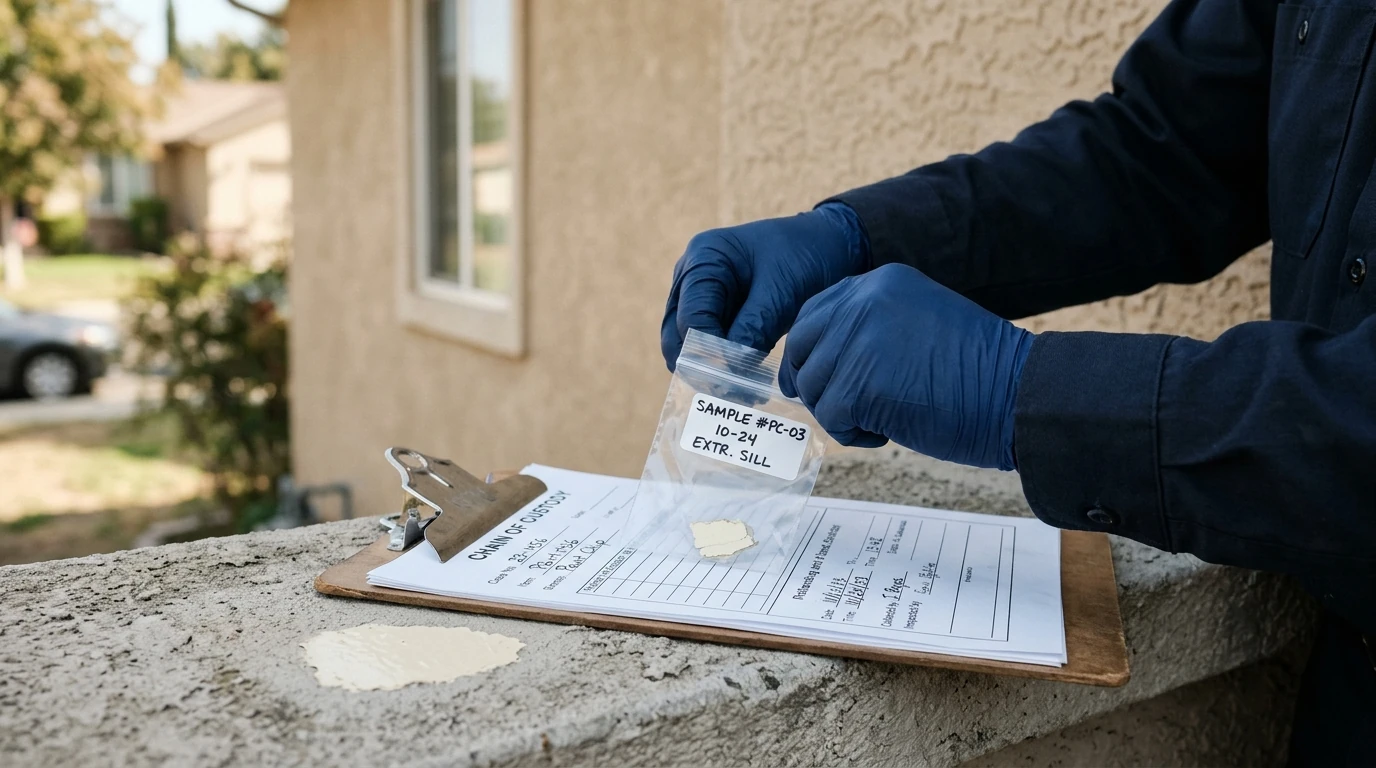
Paint chip sampling costs more per sample because it requires sending a small chip to an accredited third-party laboratory for analysis, typically by atomic absorption spectroscopy. Lab turnaround for this kind of work is industry-typical at 24 to 72 hours depending on the lab’s workload. Lab analysis is usually the right call when a substrate interferes with an XRF reading (certain metal or heavily textured surfaces can), or when a transaction specifically requires a lab-confirmed result rather than a field reading.
For most whole-home jobs, XRF is faster and more cost-effective. For a narrow dispute over one suspect component, a lab-confirmed chip sample can be worth the extra cost.
Who Pays for Lead Paint Testing During a Home Sale or Rental Turnover?
In a real estate transaction involving a pre-1978 home, the buyer typically requests and pays for lead testing during their inspection contingency period, since federal disclosure rules only require sellers to disclose KNOWN lead hazards, not to test for unknown ones. Sometimes the cost gets negotiated into closing credits if testing turns up a finding.
For rental properties built before 1978, the cost usually falls to the landlord or property manager as part of routine compliance and maintenance, particularly ahead of a unit turnover or a renovation that disturbs painted surfaces. Because Arch Environmental Group LLC only tests and never performs the remediation or repainting, the report it produces carries no incentive either way; it’s documentation that works the same whether you’re negotiating a purchase price or budgeting for a rental repaint. If you’re weighing asbestos testing alongside lead for the same older property, bundling the two on one visit is usually more efficient than two separate appointments.
Are DIY Lead Test Kits Enough?
A DIY swab-style lead test kit is fine for quick personal curiosity about one suspect spot, but it’s not enough for a real estate transaction, a loan requirement, a rental compliance file, or pre-renovation planning. These kits can flag the presence of lead on some surfaces, but they’re prone to false negatives on certain paint colors and coatings, and they don’t quantify how much lead is present or distinguish between painted layers the way XRF or lab analysis does.
The federal EPA Renovation, Repair and Painting Rule also doesn’t accept a consumer swab kit as a substitute for a certified inspection when a contractor needs to confirm work practices apply. If the result is going into a disclosure, a loan file, or a permit application, a certified inspection is the version that holds up.
What Happens During a Lead Paint Inspection?
A typical visit starts with a short conversation about the home’s age, the areas of concern, and what the result needs to support (a sale, a remodel permit, a rental file). The inspector then walks the property with an XRF analyzer, testing painted components room by room, interior and exterior, logging each reading.
Where a reading is inconclusive, or where the project calls for lab confirmation, a small paint chip sample is collected and sent to an accredited laboratory under chain-of-custody documentation. For renovation projects, dust wipe samples may also be collected from floors and windowsills per standard EPA sampling protocol.
The written report breaks down findings by room and component, so a buyer, a contractor, or a property owner can see exactly where lead-based paint was and wasn’t found. If a result calls for remediation, the next step is hiring a qualified, unaffiliated abatement contractor to do the work, then returning for independent dust wipe clearance testing to confirm the job is done. Learn more about lead paint testing in Kingsburg or see our broader guide to lead testing across the Central Valley.
If you’re planning a remodel on an older Kingsburg property, scheduling lead paint testing before demolition starts is the step that keeps a project on schedule instead of stalling it mid-renovation.
About Arch Environmental Group LLC
Arch Environmental Group LLC is an independent environmental testing company serving Kingsburg and the surrounding Central Valley, including Fresno, Visalia, Clovis, Selma, and Reedley. This guide was prepared with input from Mike Luna Lopez and the Arch team, whose inspectors hold a Certified Asbestos Consultant, Lead Inspector Assessor, and NIOSH 582 Microscopist credential. The company is licensed and insured, handles mold, asbestos, lead, indoor air quality, and water quality testing, and sends all lab samples to accredited third-party laboratories rather than analyzing them in-house, since the company’s role begins and ends with independent testing, not remediation.
Need help now? Call Arch Environmental Group LLC at (559) 296-2088.