TL;DR: Mold testing in Kingsburg involves a licensed inspector collecting air samples, surface samples, or both from suspect areas of your home. Samples go to an accredited third-party laboratory, and results typically come back within 24-72 hours. Because Kingsburg’s older housing stock and Central Valley humidity swings create real conditions for mold growth, an independent test gives you documented evidence before you make a health or financial decision.
If you’ve noticed a musty smell in a back bedroom near the Kings River corridor, found discoloration under a bathroom vanity in a 1970s ranch home off Draper Street, or your home inspector flagged “possible microbial growth” in the crawl space with your closing date approaching, you’re in the right place. Mold testing tells you what’s actually in the air and on the surfaces, not just what it looks like. Here’s what the process involves, what the results mean, and when it’s worth picking up the phone.
What does mold testing in Kingsburg actually involve?
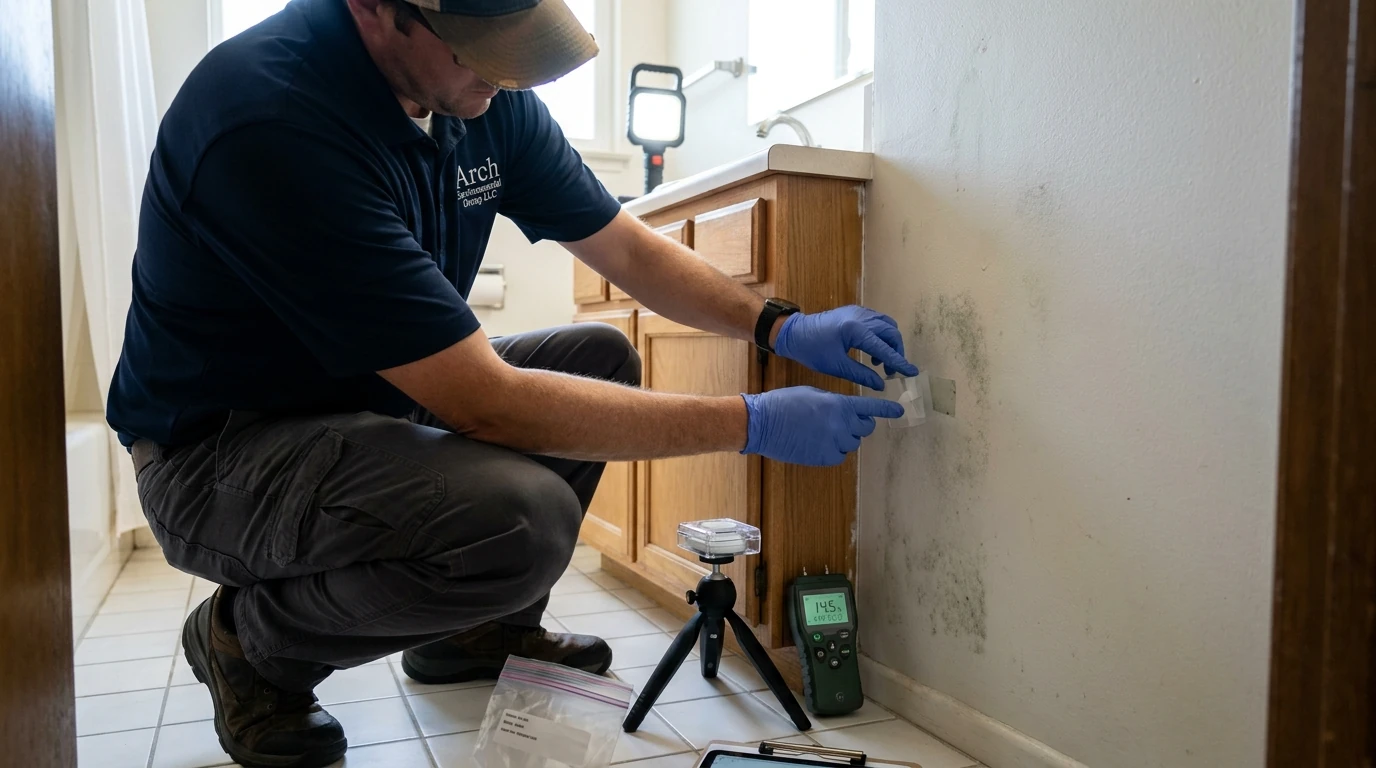
Professional mold testing collects physical samples from your home and sends them to an accredited laboratory for analysis. It is not a visual inspection alone, and it is not a DIY kit from a hardware store. A trained inspector identifies suspect areas, selects the right sampling method for each location, and establishes an outdoor baseline so the lab can compare what’s inside your home to what’s naturally present in the Central Valley air outside.
The two most common methods are air sampling and surface sampling. Air sampling uses a calibrated pump to draw a measured volume of air through a spore trap cassette, a small plastic cartridge that captures airborne particles. Surface sampling uses a tape lift or swab to collect material directly from a visible suspect area, a stain, a discolored grout line, or a fuzzy patch on drywall. Each method answers a different question. Air sampling tells you what you’re breathing. Surface sampling identifies what’s growing at a specific location. Many inspections use both. For a deeper look at how these methods compare, see our post on air sampling vs surface sampling for mold.
Samples travel to the laboratory under a chain-of-custody form, a documented handoff that maintains the integrity of the evidence. The lab identifies spore types and counts under a microscope and returns a report, typically within 24-72 hours for standard turnaround. Rush analysis is available from most accredited labs when a transaction deadline is close.
When should you get mold testing in Kingsburg?
You need mold testing when you have a specific reason to suspect a problem and need documented evidence to act on it. Not every musty smell requires a full inspection, but several situations in Kingsburg consistently point toward testing.
Real estate transactions. Kingsburg has a significant share of homes built in the 1960s through 1980s, many with original crawl spaces and minimal sub-slab vapor barriers. If a home inspector notes moisture intrusion, efflorescence on a foundation wall, or staining in the attic, a mold test before closing gives you objective data to negotiate with or walk away from. Our post on buying a house and mold testing covers exactly what testing can and can’t tell you during an option period.
After water damage. The Central Valley’s irrigation infrastructure means agricultural water is everywhere, and residential plumbing failures, roof leaks after winter storms, and swamp cooler overflows are common causes of hidden moisture. Mold can begin colonizing a wet surface within 24-72 hours according to EPA guidance on mold. If a water event happened and you’re not sure whether it was fully dried, testing is the only way to know.
Health concerns. If household members are experiencing unexplained respiratory symptoms, persistent coughing, or worsening allergy-like symptoms, an air quality test can document whether elevated mold spore counts are present. A test result is not a medical diagnosis, and we don’t make health claims, but documented spore counts give a physician useful context. The CDC’s mold resources outline the range of health effects associated with indoor mold exposure.
Post-remediation clearance. If a remediation contractor has already completed mold removal, an independent clearance test verifies their work before you sign off. This test should come from a company that did not perform the remediation, because the same firm cannot objectively verify its own work. That independence is the point.
Musty odors with no visible source. Mold growing inside wall cavities, under flooring, or in HVAC ductwork often has no visible surface signature. Air sampling can detect elevated spore concentrations even when there’s nothing to see.
How does independent mold testing protect you?
Independent testing means the company collecting your samples has no financial interest in what the results say. They do not perform the remediation, they do not sell you cleanup services, and their report works with any qualified contractor you choose to hire.
This matters more than most homeowners realize. A company that tests and remediates has an inherent incentive to find problems. An independent tester’s only product is an accurate report. If the results come back clean, that’s the answer you get. If the results show elevated counts, the report documents exactly what was found, where, and at what concentration, so a remediation contractor can scope the work precisely and you can verify it was done correctly with a follow-up clearance test.
Arch Environmental Group LLC operates on this model. The inspection generates a laboratory-backed report. What happens after that, including any remediation, is your decision and your contractor’s work. The clearance test at the end of that process is where we come back in, to verify the contractor’s results independently.
For more on why this separation matters, see our post on why your mold tester should never be your mold remover.
What do mold test results actually tell you?
A mold laboratory report lists the spore types identified, their concentrations (usually expressed as spores per cubic meter of air for air samples), and a comparison to the outdoor baseline sample collected at the same property. The outdoor sample is critical: Central Valley air naturally carries agricultural dust, pollen, and some background mold spores, especially during harvest season. A result that looks alarming in isolation may be within normal range for outdoor air in Fresno County. A result that looks modest may still be significant if the indoor count is substantially higher than the outdoor baseline.
Common spore types found in Central Valley homes include Cladosporium, which is widespread and typically outdoor-origin, Aspergillus/Penicillium, which are common indoor mold genera associated with water-damaged materials, and Stachybotrys, which requires chronically wet cellulose material to grow and is less common but more associated with serious moisture problems.
The report does not tell you what the mold will do to any specific person’s health. It tells you what is present and at what level. Your physician interprets the health implications. The remediation contractor interprets the scope of work. The report is the shared document that makes both conversations factual instead of speculative.
What should you do before and after a mold test?
Before the inspection, avoid running HVAC systems or opening windows for at least two to four hours before air sampling. Normal ventilation dilutes airborne spores and can affect results. Note any areas of visible concern, any history of water events, and any recent remediation work so the inspector can prioritize sampling locations.
After the inspection, the inspector will walk you through the sampling locations and explain what the lab report will include. Results typically arrive within 24-72 hours. If results show elevated counts, the next step is hiring a qualified, licensed remediation contractor to scope and perform the work. Once remediation is complete, schedule a clearance test from an independent inspector, not the same company that did the cleanup, to verify the space is within normal range before you close up walls or move back in.
If you’re in Kingsburg or the surrounding Central Valley and ready to schedule, Arch Environmental Group LLC provides mold inspection and testing, indoor air quality testing, clearance testing, and post-flood mold assessment for residential and commercial properties. Call (559) 296-2088 or schedule online to discuss your situation.
About Arch Environmental Group LLC
Arch Environmental Group LLC is an independent environmental testing company based in Kingsburg, CA, serving the Central Valley including Fresno, Visalia, Clovis, Selma, Reedley, Sanger, and surrounding communities. The company is licensed and insured, and holds certifications as a Certified Asbestos Consultant, Lead Inspector Assessor, and NIOSH 582 Microscopist. Services include mold inspection and testing, indoor air quality testing, asbestos testing, lead paint testing, water quality testing, clearance testing, radon testing, VOC and formaldehyde testing, post-flood mold assessment, and additional environmental assessment services. All field samples are analyzed by accredited third-party laboratories.