
For lead paint testing in Kingsburg, call Arch Environmental Group LLC at (559) 296-2088. The inspector holds a California Lead Inspector/Assessor certification, along with Certified Asbestos Consultant and NIOSH 582 microscopist credentials, and because Arch tests paint rather than removes it, there’s no abatement upsell riding on what the reading shows.
If you’re staring down a remodel permit for a farmhouse near downtown’s Swedish-village storefronts, a buyer’s inspection contingency on a Kings River-area bungalow, or a tenant complaint about peeling trim, the question isn’t just “who do I call,” it’s “which kind of test does this situation actually need.” That’s what the rest of this covers.
When do you actually need a certified inspector instead of a DIY kit?
Call a certified lead inspector any time the result has to hold up for a renovation permit, a real estate transaction, or a tenant dispute. A hardware-store swab test only gives a rough yes-or-no on one spot and isn’t accepted as a determination method under the EPA’s Lead Renovation, Repair and Painting (RRP) rule.
Sodium sulfide swab kits react with lead compounds, but they can miss lead hidden under newer top coats, and they don’t quantify how much lead is in the paint or where it sits in the layer history. For a pre-1978 Kingsburg home (federal law banned residential lead paint that year, per the EPA), that distinction matters: a contractor can’t legally treat the area as lead-free based on a drugstore kit, and an insurer or buyer’s agent generally won’t either.
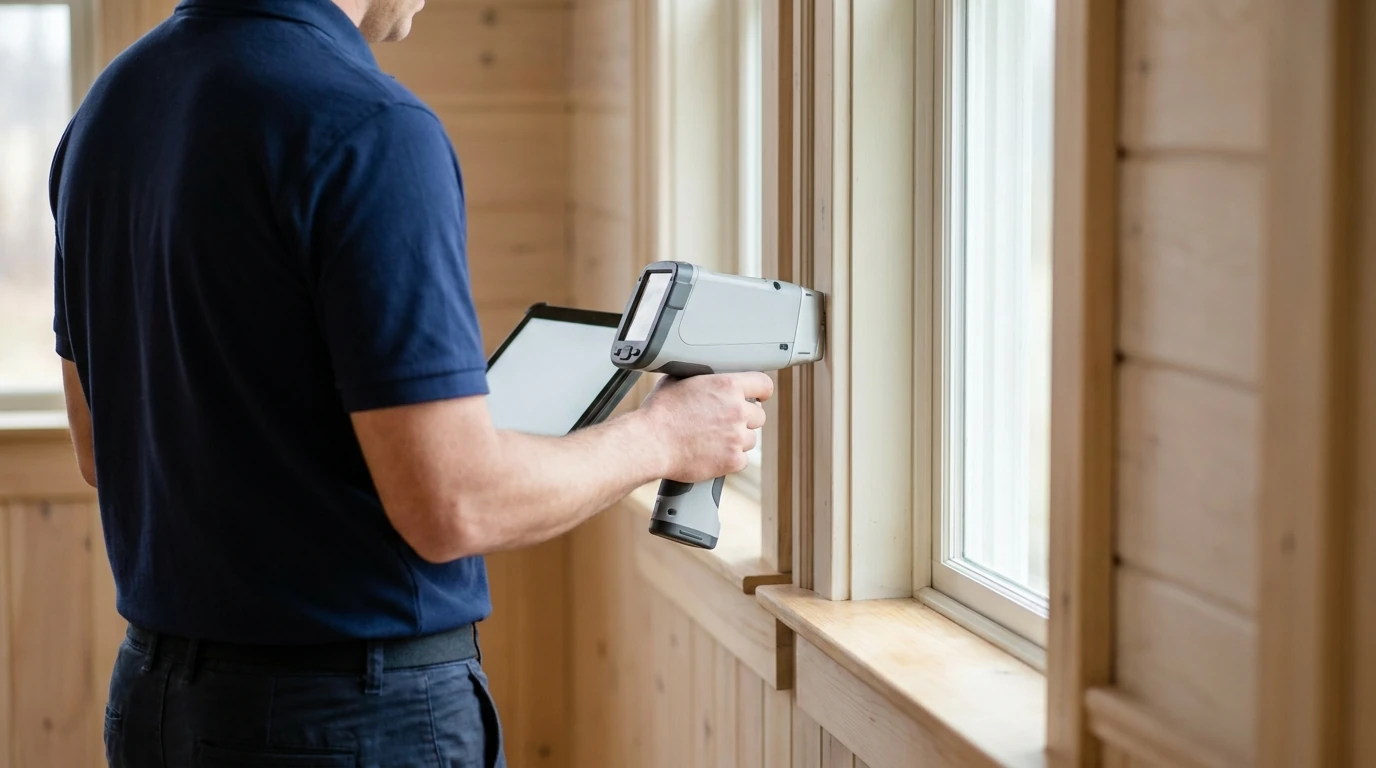
A certified inspector uses an XRF (X-ray fluorescence) analyzer that reads the lead content through the paint layers in seconds, non-destructively, component by component: window casings, baseboards, door jambs, exterior trim. That’s the version of “lead paint testing” that actually satisfies a permit office, a disclosure form, or an RRP-certified renovator’s paperwork.
Lead inspection or lead risk assessment, which one do you need?
A lead inspection tells you whether lead-based paint is present and exactly where; a lead risk assessment goes further and identifies which of those surfaces are an actual hazard right now, plus what it would take to control them. Pick the inspection when you’re clearing a renovation scope or a sale; pick the risk assessment when there’s deteriorated paint, lead dust, or a documented health concern already on the table.
Most pre-renovation and pre-sale calls only need the inspection: a component-by-component survey that flags which surfaces contain lead paint so the contractor can plan around them. A risk assessment adds dust wipe sampling and a condition survey of peeling, chipping, or friction surfaces (windows, doors) and ends with a hazard-reduction recommendation, not just a yes or no. If a child in the household has had an elevated blood lead test, or a landlord has an active complaint, the risk assessment is the right scope, not the basic inspection.
Our lead testing overview for Kingsburg walks through what each report actually contains if you want the longer version before you book.
What happens when you call, and how do XRF readings and lab samples differ?
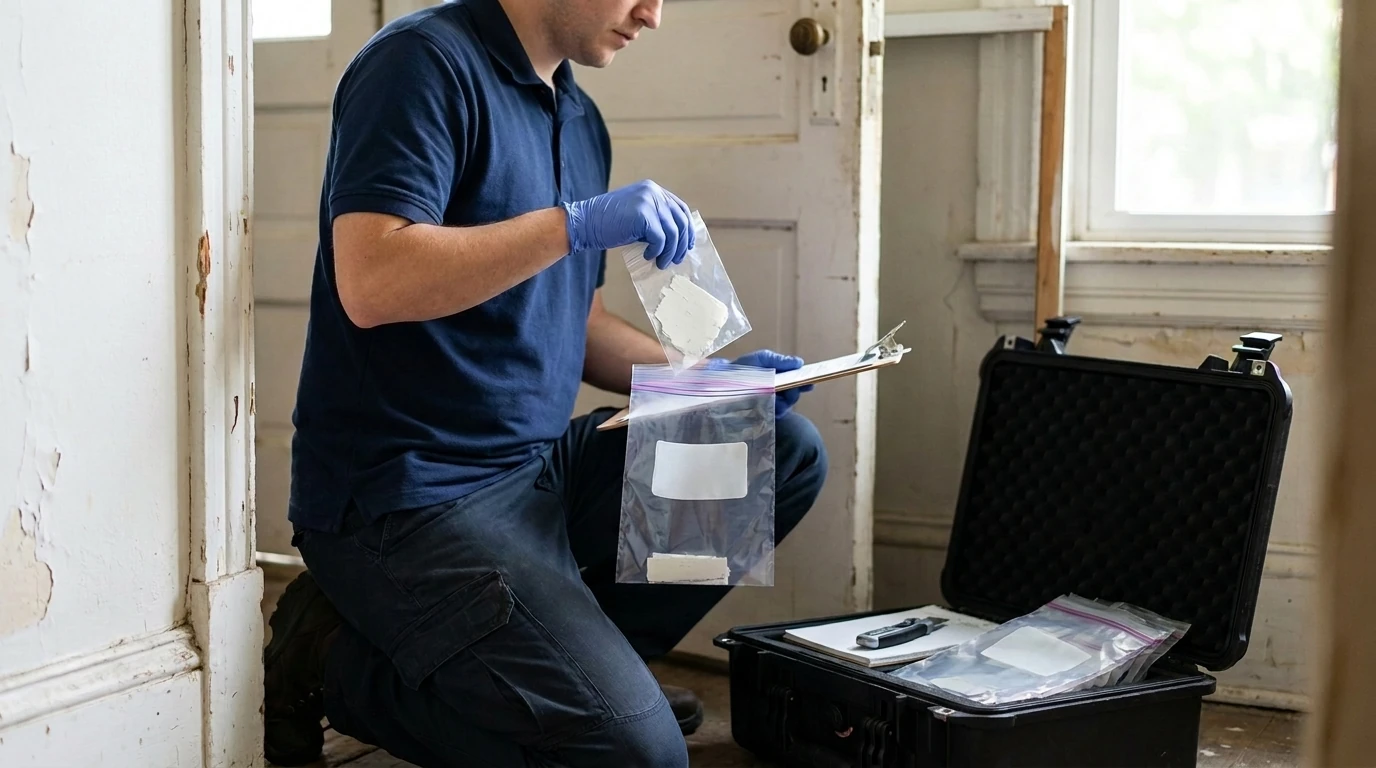
Most of the job is handled with the XRF reader on-site; paint chip samples only go to an accredited lab when a surface is too curved, textured, or substrate-dense for a reliable direct reading. XRF gives you same-visit numbers for most components; chip samples add a few business days for destructive lab analysis.
When you call, have the property’s approximate build year, the rooms or exterior elements in scope, and your timeline (permit deadline, closing date, move-in date) ready. On-site, the inspector scans painted components in a defined pattern, documents readings against each substrate, and pulls a small paint chip sample into a labeled, chain-of-custody bag only where the XRF reading is inconclusive. You get a written report listing every tested component, its result, and whether it’s classified as lead-based paint under the applicable threshold.
To confirm any inspector’s credentials before you book (ours or anyone’s), the California Department of Public Health maintains the state registry of certified lead professionals. Ask for the certification number directly and check it against that registry; a legitimate inspector will hand it over without hesitation.
What happens after a positive result?
A positive lead paint result means you hire a qualified, RRP-certified or lead-abatement contractor to do the actual work, not the company that tested it. Arch Environmental Group doesn’t perform abatement, encapsulation, or renovation, so the report is written to work with whichever licensed contractor you choose, and you’re never pushed toward one.
Once that contractor’s work is complete, bringing in an independent tester for clearance sampling is the step that actually verifies the job was done right, which is exactly why that check shouldn’t come from the same company that did the removal. If you’re weighing whether the home also needs an asbestos test before the same renovation, pre-1978 Central Valley construction often carries both concerns in the same walls.
If you’re ready to get a certified inspector on the calendar, schedule lead paint testing or get in touch to describe your timeline and we’ll scope the visit.
About Arch Environmental Group LLC
Arch Environmental Group LLC is a locally owned, licensed and insured environmental testing company based in Kingsburg, CA, serving the Central Valley including Fresno, Visalia, Clovis, Selma, and Reedley. Its inspector holds a California Lead Inspector/Assessor certification, a Certified Asbestos Consultant designation, and a NIOSH 582 microscopist credential, and handles mold, asbestos, lead, water quality, and indoor air quality testing with samples analyzed by accredited third-party laboratories. The company carries a 5.0 Google rating across 34 reviews.